


Fire Protection System Audits: Technical Checklist Under NFPA and FM Standards
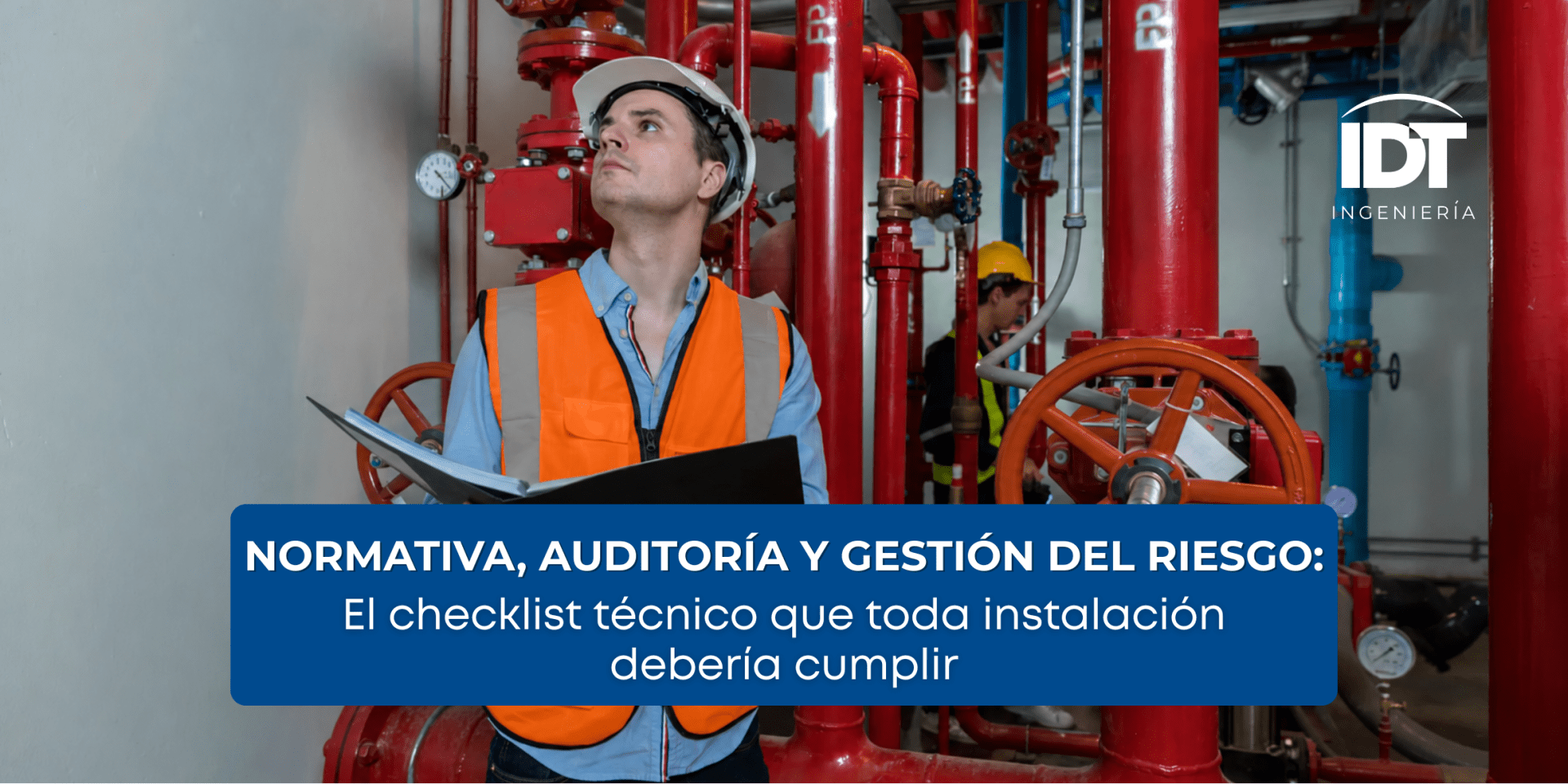
Discover the recommended technical checklist based on codes and standards published by NFPA and FM guidelines for fire protection system audits. Improve safety, risk management, and operational continuity with IDT INGENIERÍA.
In today’s industrial environment, complying with international fire protection standards is no longer just a technical requirement — it is a critical strategy to ensure safety, operational continuity, and risk reduction across industrial, commercial, and corporate facilities.
Codes and standards published by the National Fire Protection Association (NFPA), along with FM guidelines and FM-approved equipment criteria, provide essential references for the design, inspection, maintenance, and operability of fire protection systems.
However, the real challenge is not only implementing a system, but ensuring that it continues operating properly when a real emergency occurs.
Why Is a Technical Fire Protection Audit Important?
A specialized technical audit allows organizations to evaluate the real condition of fire protection systems and identify operational deviations before they become critical failures affecting people, assets, or production processes.
According to standards published by NFPA, such as NFPA 25, and FM loss prevention guidelines, periodic inspections are essential to guarantee system reliability and minimize operational risks.
During a technical audit, the following aspects are evaluated:
- Operational condition of critical equipment.
- Condition of valves and fire protection water networks.
- Inspection and maintenance records.
- Functionality of fire detection and alarm systems.
- Accessibility and operability of emergency equipment.
- Conditions that may compromise system performance.
These evaluations strengthen risk management, reduce technical findings, and directly support operational continuity.
Recommended Technical Checklist Based on NFPA and FM Standards
✅ Operational condition of fire protection control valves.
✅ Proper pressure levels in fire protection water networks and pumping systems.
✅ Functionality of fire detection and alarm panels.
✅ Updated inspection, testing, and maintenance records.
✅ Accessibility and visibility of emergency equipment.
✅ Condition of automatic sprinklers and fire hose cabinets.
✅ Availability of primary and backup power sources.
✅ Verification of obstructions or damage in pipes and devices.
Applying this preventive checklist helps identify potential failures before emergencies occur and ensures that systems perform properly when needed most.
NFPA and FM Standards: Foundations for Effective Fire Protection
NFPA codes and standards, FM guidelines, and FM Approvals certifications are globally recognized references in industrial safety and fire protection.
Among the most widely used are:
- NFPA 25 — Inspection, testing, and maintenance of water-based fire protection systems.
- NFPA 72 — Fire detection and alarm systems.
- NFPA 13 — Design and installation of sprinkler systems.
- FM Approvals — Certification and validation of highly reliable fire protection equipment.
Implementing systems aligned with these references improves safety, optimizes audits, and strengthens technical compliance with clients, insurers, and industrial operations.
IDT INGENIERÍA: Solutions Aligned with International Standards
At IDT INGENIERÍA, we provide comprehensive solutions in:
- Fire protection systems.
- Fire detection and alarm systems.
- Fire protection water networks.
- Pumping systems.
- Electronic security and BMS.
- Inspection, auditing, and specialized maintenance.
We work under NFPA standards and FM criteria, prioritizing safety, traceability, and operational reliability in every project.
Because a fire protection system should not only be installed — it must be ready to respond effectively at the most critical moment.
For the development of this article, international standards and guidelines related to the inspection, testing, maintenance, design, and reliability of fire protection systems were considered:
National Fire Protection Association. NFPA 25: Standard for the Inspection, Testing, and Maintenance of Water-Based Fire Protection Systems.
National Fire Protection Association. NFPA 72: National Fire Alarm and Signaling Code.
National Fire Protection Association. NFPA 13: Standard for the Installation of Sprinkler Systems.
National Fire Protection Association. NFPA 20: Standard for the Installation of Stationary Pumps for Fire Protection.
FM. FM Property Loss Prevention Data Sheets.
FM Approvals. Certification and Approval Guide.